
What water damage restoration covers
A flood from a supply line, a water heater, a washer, or a storm that found a way indoors does two kinds of damage. The water you can see sits on the floor. The water you cannot see climbs the drywall, soaks the carpet pad, and stays in the cavity after the puddle is gone. Restoration is the sequence that deals with both: get the standing water out, take out materials that will not dry in place, dry what remains, and write down the readings.
Weller takes that emergency and schedules the crew. The work on site is extraction and drying, not a remodel and not a claim negotiation. If the house needs new flooring or paint after it is dry, that is a later trade. The first job is to stop the water from staying in the structure.
The same sequence is what a search for water damage restoration, water damage cleanup, or emergency water removal is asking for. The city matters because the crew is scheduled for the address, not for a national map. Start with the cities Weller covers, or go straight to Los Angeles, Dallas, Las Vegas, or Baltimore.
Clean water, gray water, and sewage
The source changes the job. A burst supply line or a failed water-heater hose is clean water if it is caught quickly. It is still destructive. It wicks, it stains, and it will support mold if the assembly stays wet, but it does not start out as waste.
Water from a washing machine, a dishwasher, or an overflowing tub has already touched soap, food, or dirt. It is handled more carefully than a supply line, and porous materials that drank it often come out instead of being dried in place.
Sewage and a drain backup are the third case. That water can carry bacteria. Pad, wet insulation, and drywall that touched it are removed. People working in it wear protection. Calling it a mop-up because the bathroom looks small is how that water gets left in the wall.
Water removal
Extraction comes before any drying equipment
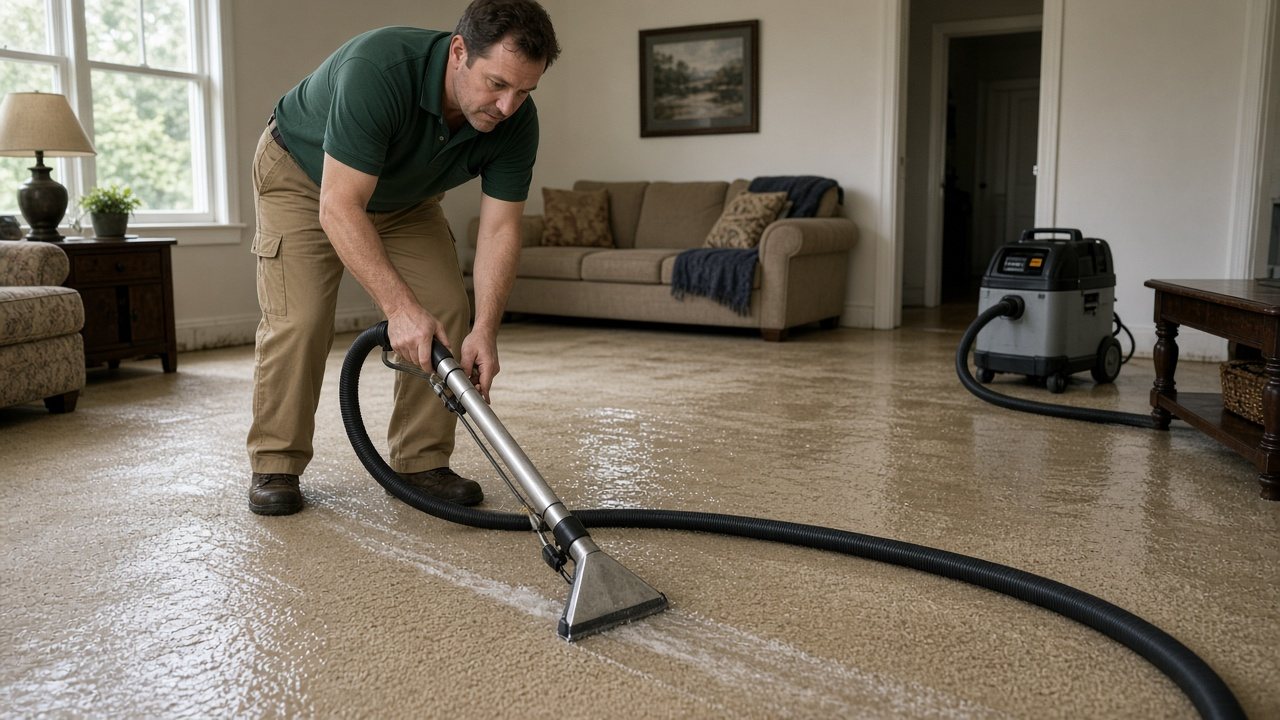
Pumps and weighted extractors take standing water off hard floors, carpet, and pad. On a large loss that can be hundreds of gallons. Leaving it and pointing a fan at the room only moves the water into the base of the wall and under the trim.
Carpet that is holding water is pulled back. The pad underneath is almost always discarded on a wet loss, because pad does not dry evenly and it stays dirty. The carpet itself is saved only when it can actually be cleaned and dried. A technician says which is which after it is lifted, not from the doorway.
Structural drying
Drying the water inside the materials
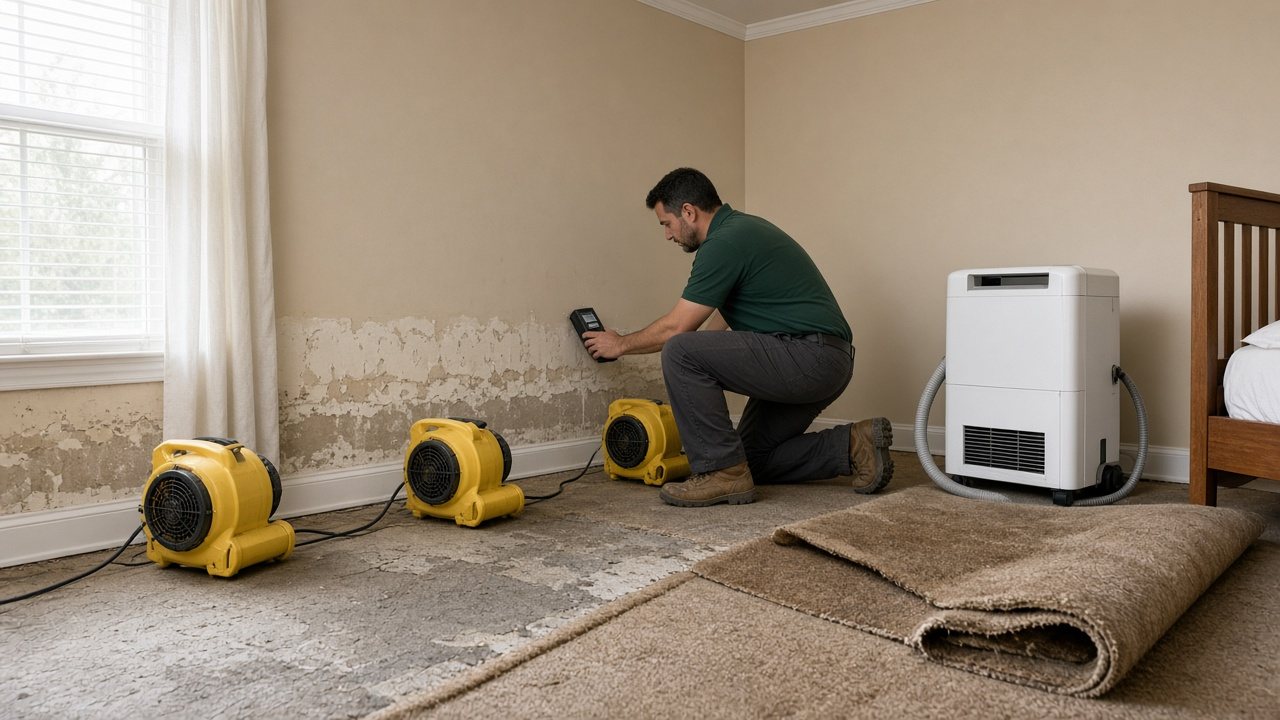
Once the free water is gone, air movers go on the wet walls and floors and dehumidifiers pull moisture out of the air so the materials can release it. The count of machines follows the size of the wet area, the materials, and how closed the rooms are. A single box fan in an open window does not replace that.
Drying protects the assemblies you are trying to keep: studs that would swell, a subfloor that would cup, plaster that would keep a damp core. Equipment is set on the first visit. It stays until readings, taken in the same spots, say the material is back to a dry range. A wall that looks dry and still reads wet is not finished.
Monitoring
Readings, not a guess from the paint
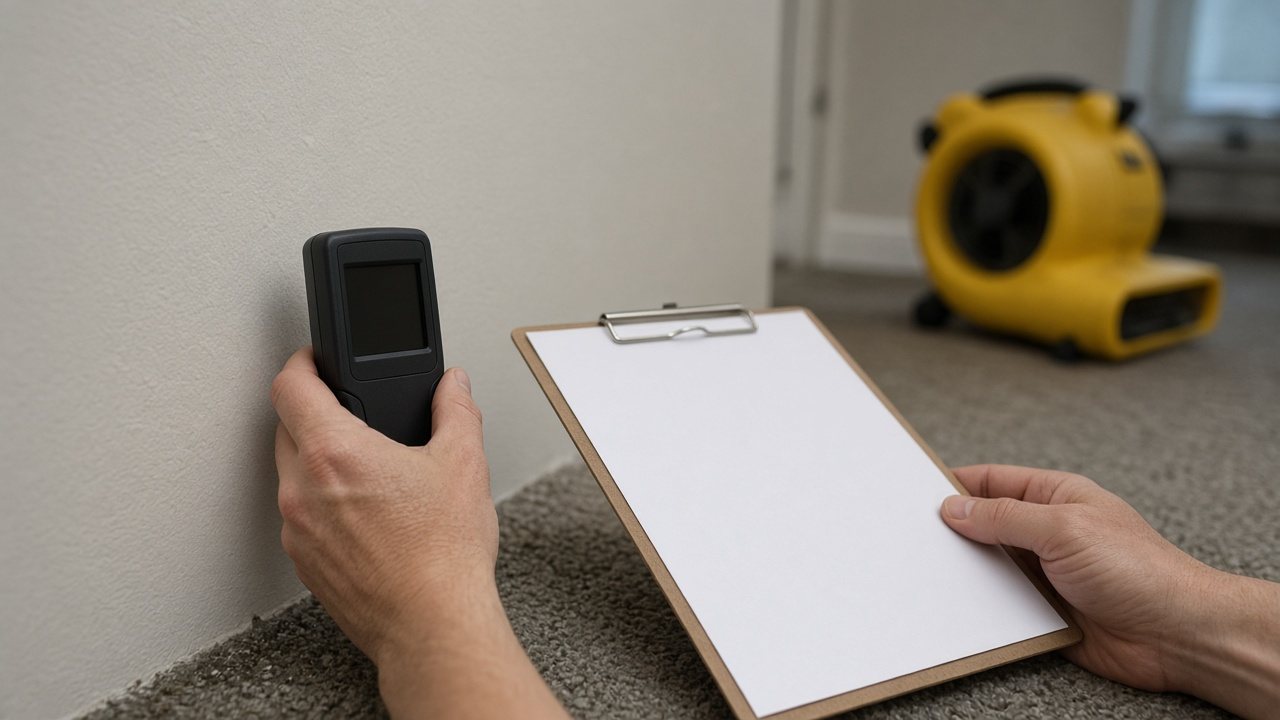
A moisture meter maps what got wet: the bottom of the drywall, the sill, the subfloor, and any cavity that was opened. Those numbers go on a drying log with the date, the room, and the equipment in the room. The next visit compares the same spots.
That log is the document an adjuster can use. Weller does not call the carrier for you, does not fill out the proof of loss, and does not argue the settlement. You keep the record and you talk to your insurer. If a material cannot be dried, that is said before it is thrown out, and it is photographed.
Steps on a water-damage job
- The call. Dispatch needs the city, that you own the property, where the water is, and whether it is still running. The crew is scheduled on that call. What happens on the line is spelled out on the call.
- A look at the loss. The first task on site is to see how far the water went, whether power is in it, and whether the source is stopped. A wet ceiling, a warm slab, or water in a closet changes the plan.
- Extraction. Standing water leaves with pumps and extractors before drying equipment is set.
- Materials that will not dry. Pad, wet insulation, and drywall above the water line that a meter condemns come out. Dry material stays. This is not a gut because a room looks bad.
- Cleaning where the water was dirty. Sewage and drain water get a different clean than a supply-line leak. Surfaces that were contacted are not left as they were found.
- Drying and return visits. Air movers and dehumidifiers run while readings are checked and equipment is moved if a spot is lagging.
- The record. Photos, the moisture map, and what was removed. Rebuild, flooring, and paint come after the structure is dry, and they are not this dispatch.
Below grade
Basement flooding and water under a slab
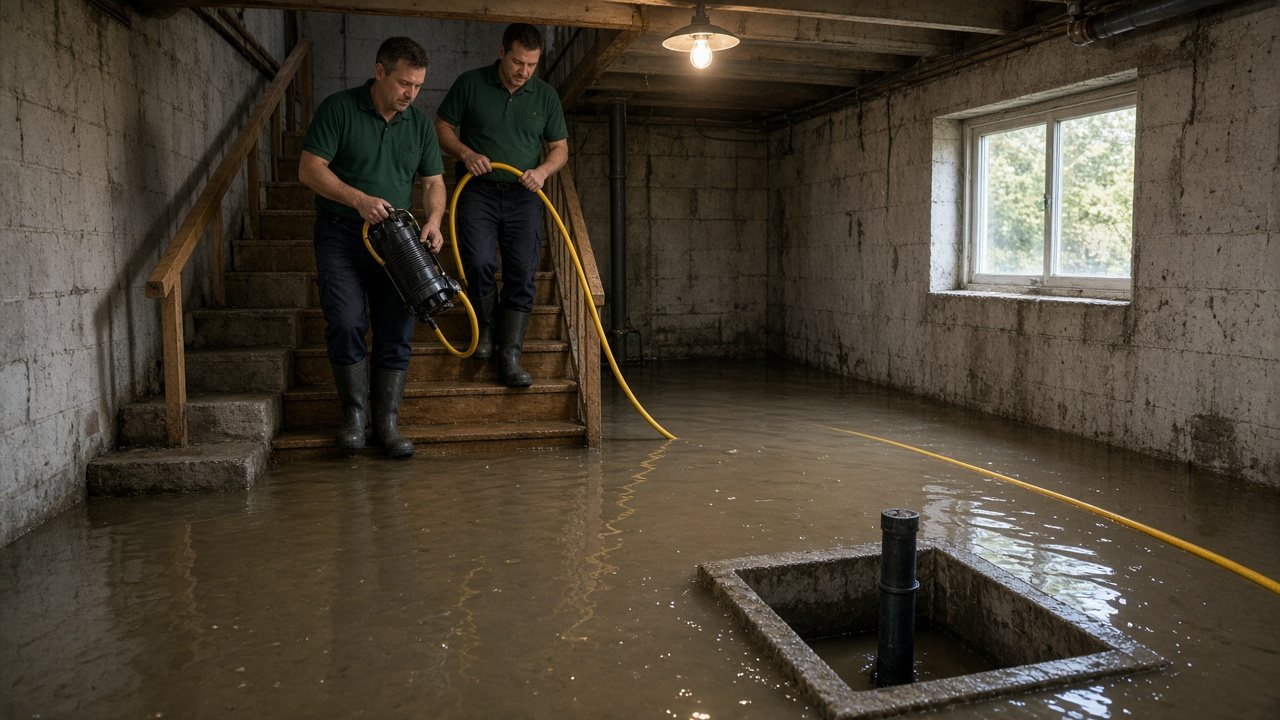
A finished or unfinished basement holds water against the foundation, the sill, and anything stored on the concrete. Extraction starts at the low point. If a sump failed, say so. If the water came through the wall from outside, that is different from a supply line that broke at the water heater, and the insurer will treat those sources differently.
A slab leak is the opposite problem: hot water under the concrete that has already come up through the floor. The room is often warm before the puddle is obvious. The drying still has to reach the wet floor assembly. Finding and repairing the line under the slab is a plumber’s job. Weller’s job is the water that is already in the house.
Crawl spaces are the same idea in a tighter place. Standing water under the floor keeps the subfloor wet no matter how dry the room above looks.
Contaminated water
Sewage cleanup and drain backups
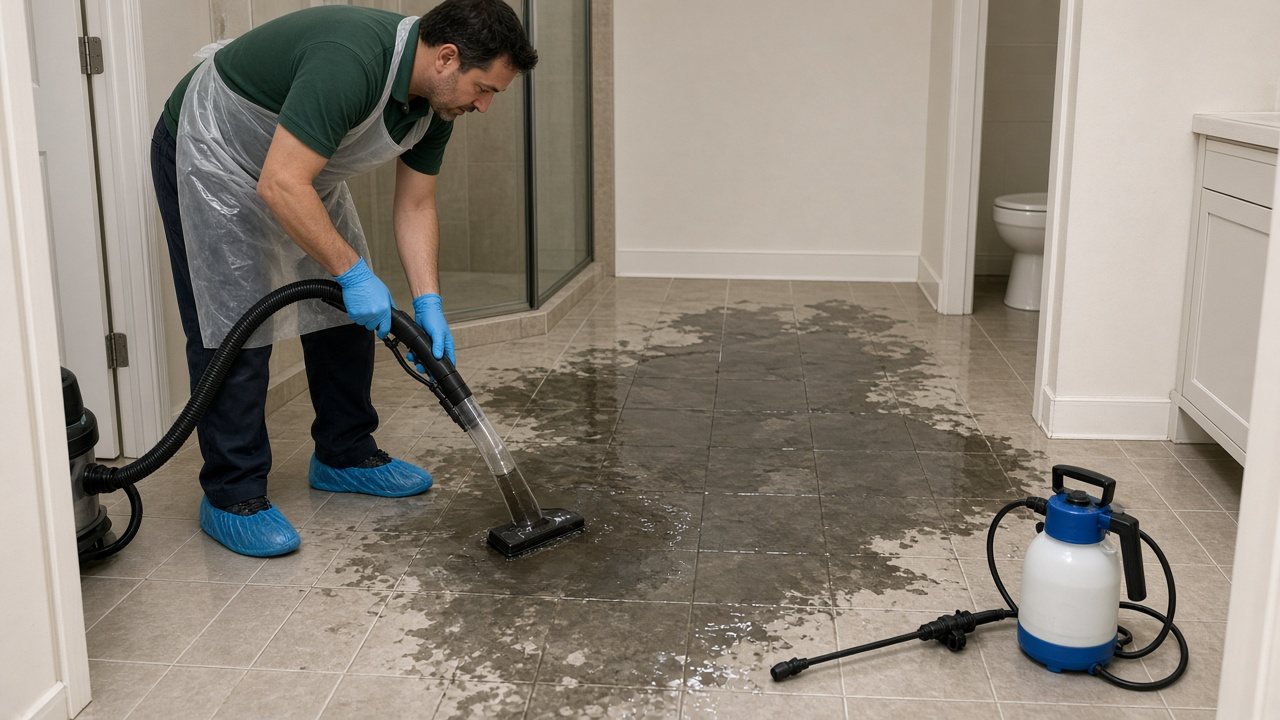
A toilet that overflowed, a main line that backed up into a tub or a floor drain, or a washing machine that discharged onto the floor is an emergency because of what is in the water, not only because of the mess. Affected porous materials come out. The people doing the work use gloves, shoe covers, and a real extractor, not a kitchen mop that goes back under the sink.
Keep children and pets out of the room. Do not run the HVAC if the return is in the water, or you will pull that air through the house. Tell dispatch it is sewage when you call. A crew that arrives expecting a clean supply line is the wrong setup.
Water in the ceiling
Rain through a failed roof, a tub or toilet on the floor above, or a supply line in a joist bay shows up as a stain, a sag, or a bubble. The drywall is holding water until it fails. If you can shut the upstairs water off safely, do that. Stay out from under a ceiling that is bowing, and leave the light switch alone in that room.
The crew extracts what has already come through, opens wet drywall where the meter says the cavity is wet, and dries the joist bay. In Maryland, when the source is the roof itself, that opening can be scheduled on the same dispatch as a repair. Everywhere else, say “roof leak” so it is not treated as a burst pipe. A pipe in the ceiling and a hole in the roof are different jobs.
Furniture, rugs, and papers
Water on the floor ruins contents that stay in it. Furniture legs go up on blocks or foil so they are not standing in wet carpet. Cushions come off and are dried separately, not stuffed in a washing machine while they are still soaked with dirty water. Paintings, documents, and electronics move to a dry room.
Weller does not run a warehouse and does not haul a houseful of furniture to storage. What can be moved off the wet floor, inside the house, gets moved. What cannot be saved is photographed before it is discarded. If a piece matters, say so before the pad comes up.
What to do before the crew is in the driveway
- Shut the water off at the fixture or the meter if you can do it without stepping through a flooded panel room.
- Kill power to wet rooms only if the breaker panel is dry and you can reach it without standing in water.
- Keep out of rooms where the ceiling is sagging or outlets are under water.
- Move photos, papers, and computers to a dry room. Lift furniture legs off wet carpet if it is safe to do it.
- Do not use a household vacuum, and do not turn ceiling lights on under a wet ceiling.
- Note what failed: supply line, water heater, appliance, toilet, drain, or rain. That sentence changes the job and the claim.
Mopping a thin film off the hardwood is useful. Tearing out walls before anyone has metered them throws away material that might have dried, and it throws away the photos of the loss. If you are past a light film and into standing water, stop and make the call.
After the structure is dry
Drywall that came out, flooring that could not be saved, and paint are reconstruction. Weller’s dispatch is the emergency drying, not a general contractor’s rebuild. Mixing those two on the first call slows the part that has to happen while the water is still moving. When the readings are dry, you can hire the rebuild with a clear scope instead of a wet guess.
Mold is what happens when wet material is closed up and left. The way this job prevents that is by removing what is saturated and drying what remains while it is still open. A separate mold project, after a house has been wet for weeks, is not the same visit as an emergency extraction.
Where this runs
The service is published city by city: Los Angeles County, the Dallas-area cities on the list, Clark County, and Baltimore, Harford, and Frederick counties. Each city page describes the houses and the way water shows up there, because a slab in Dallas is not a bungalow in Pasadena. Use the list or the city search. If the ZIP is not covered, the page says so instead of offering a crew that is not scheduled there.
Water damage questions
What is water damage restoration?
It is the work of getting unwanted water out of a building, drying the materials that can be saved, removing the ones that cannot, and recording the moisture until the structure is dry. A mop and a fan do not finish that job once water has reached the pad, the insulation, or the wall cavity.
How do you clean up water damage in a house?
Stop the source if you can do it safely, keep power away from wet rooms, and get standing water off the floors. The crew then extracts what is left, pulls materials a meter shows are wet, sets air movers and dehumidifiers, and comes back to check the readings. Do not use a household vacuum on standing water.
How long does it take to dry water damage?
A contained clean-water loss in one or two rooms often dries in a few days once the standing water is out and the equipment is sized to the space. Sewage, wet insulation, saturated plaster, or a basement that stayed flooded longer can take longer. The drying log, not the look of the paint, says when it is done.
Is it safe to stay in a flooded house?
Not while outlets, the panel, or appliances are in the water, and not in a room where the ceiling is sagging. Sewage and drain water can make people sick. If the water is only in one room, the power to that room is off, and you can reach a dry part of the house, many owners stay. If you are not sure, stay out of the wet rooms until someone has looked at the power.
What should I do about water in the ceiling?
A bubble in the ceiling is water sitting above the drywall. If the source is a supply line, shut that water off when you can do it without standing under the sag. Do not poke the bubble from below while you are under it, and do not turn on a ceiling light in that room. Tell dispatch whether it is a pipe, an upstairs fixture, or rain through the roof.
What does sewage cleanup include?
A toilet overflow or a drain that came back into the house is treated as contaminated from the first step. The water is extracted, affected pad and drywall come out, and the surfaces that were touched are cleaned. It is not wiped with a household cleaner and left to dry.
Will homeowners insurance cover this?
Many policies pay for a sudden pipe, appliance, or water-heater leak and do not pay for a long-term leak, poor maintenance, or flood water from outside. Weather flooding is often a separate policy. Weller writes the moisture record you can hand to the carrier. Weller does not file the claim and does not negotiate the settlement.
What changes the cost of a water loss?
How far the water traveled, whether it is clean or contaminated, how much pad and drywall have to come out, and how many rooms need equipment. A supply line in a hallway is a different job from sewage across a finished basement. There is no single price, and a number given before anyone sees the water is a guess.